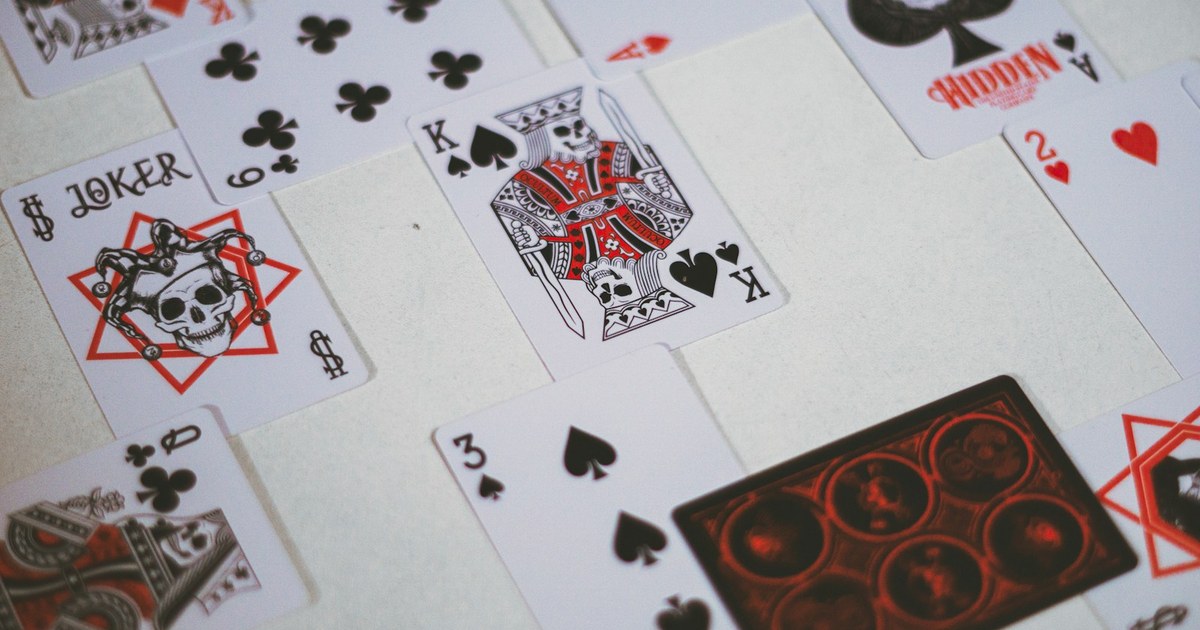
A good Call Break bid starts with an estimate of your likely winning tricks, not a fixed formula. Count your strongest trump cards, weigh your side-suit aces, and think about how the distribution of your remaining cards could shape each trick. In this trick-taking card game, four players compete as individuals using a standard 52-card deck where spades are always the permanent trump suit. Each player receives 13 cards. Card ranks run from Ace down to 2, with Ace as the highest card and 2 as the lowest. Because spades beat every non-trump card regardless of numerical rank, your bidding decision hinges on judging which cards are likely to win tricks and which carry risk.
How scoring punishes both directions
Before any cards are played to the centre, every player calls a number, which is the number of tricks they undertake to win. The call must be at least two, and the highest sensible call is twelve. The call break rules explain the full flow; the scoring is what decides your call.
Settlement details vary between versions, so the description below follows the ruleset recorded on Pagat, and you should check your table’s terms before play. In that version, success means winning the number called, or exactly one more. If you succeed, the number called is added to your running score. If you fail, it is subtracted. A call of four therefore succeeds on four or five tricks and scores four points, while three tricks or fewer, or six or more, loses four points. Calls of eight or higher are bonus calls that score thirteen when successful.
Many other versions remove the penalty for taking too many tricks, so you only need to reach your call. Some of those award a small bonus, commonly a tenth of a point, for each trick beyond the call. This is a genuine difference between tables, because it changes whether an uncalled trick is a gain or a loss.
Under the Pagat version, overbidding is dangerous and so is winning too many tricks. Bidding one higher than your safe count turns a gain into a loss the moment the extra trick fails to appear, and capturing a sixth trick on a call of four does the same. Underbidding is milder: you secure your called value while leaving tricks you did win unclaimed.
Counting likely tricks first
To arrive at a sensible call, inspect your 13 cards and tally your strongest tricks before factoring in hopeful ones. The spade Ace is about as reliable as a trick gets, because it is the highest card in the permanent trump suit. The spade King is powerful too, but its safety depends on where the spade Ace sits and whether you are forced to spend it early. Side-suit aces are strong winners, but they stay vulnerable to a cut: if an opponent runs out of that suit, a spade takes the trick.
In this ruleset a player who cannot follow suit must trump if a spade is available and high enough to beat any spades already in the trick. That obligation cuts both ways. It is why your side-suit ace can be trumped, and why a long trump suit gains value late, when the others have spent theirs.
Hand shape matters too. Long suits headed by high cards produce tricks when you hold the lead, while short suits full of low cards produce nothing on their own. Seating also affects timing, because the order in which you act shapes whether your middle cards survive.
A worked counting example
Consider a concrete hand of 13 cards dealt to you:
- Spades: Ace, King, 5
- Hearts: Ace, 7, 4
- Diamonds: King, 6
- Clubs: 9, 5, 4, 3, 2
Start with the cards that are hard to beat. The spade Ace is the highest trump, so it is your most dependable trick. The spade King is strong, but you hold the spade Ace yourself, so the danger is not another player’s Ace. The real risk is being forced to play the King while following to a spade lead at an awkward moment. Treat it as very likely rather than certain.
The heart Ace is another strong candidate, but a heart lead can be trumped by any opponent who is out of hearts and still has a spade, and this ruleset obliges them to trump. The diamond King is the shakiest high card: the diamond Ace beats it outright, and a spade cut beats it too.
Your clubs are five low cards that win nothing on rank. Three tricks is therefore a reasonable conservative call, and four is a stretch that leans on the diamond King holding up. That number is an estimate, not a guarantee. The result depends on how the missing cards are distributed, the order the tricks are played, and the rules at your table.
When to call one higher
Adding one to your conservative estimate is justified when your hand holds real trump length, such as five or more spades. Your low spades then win tricks late, after the others have spent theirs, because anyone who cannot follow suit is obliged to trump. Trump length also protects your high cards, since the opponents have fewer ways to cut your side-suit aces.
Touching honours are a weaker reason to stretch. A King and Queen in one side suit sounds promising, because one honour can force out the ace and promote the other, but that only works if you can lead the suit twice and nobody cuts in between. Under a ruleset that penalises overtricks, an extra winner is not automatically good news, so stretching is sound only when the extra trick is genuinely likely.
One habit worth building: once your call is made, the question changes. If you have reached your number, spare trumps are better spent controlling the later tricks than grabbing points you do not need. Never follow a fixed formula. Reliable results come from counting, reading distribution, and knowing how your table scores.
FAQ
What happens if I fail to reach my call in Call Break?
In the ruleset described here, you lose points equal to your call. A call of four that wins only three tricks scores minus four. Note that in the same ruleset, winning six or more tricks on a call of four also loses four points, because success means exactly the call or exactly one more.
Why is overbidding dangerous?
Overbidding converts an expected gain into a loss the moment the extra trick fails to appear. How costly an overtrick is depends on the version: the Pagat ruleset penalises it, while many other versions award a small bonus for each trick above the call.
Are spades always the highest suit in Call Break?
Yes. Spades are the permanent trump suit in standard Call Break. Any spade automatically beats cards of other suits played in that trick, regardless of their numerical rank.
Does a King always count as a guaranteed trick?
No. A side-suit King can be captured by the ace of that suit, and it can also be cut by any spade if an opponent has run out of the suit. Even the spade King is not absolutely certain, because you may be forced to spend it at a moment you did not choose.
Sources
- Pagat, Call Bridge (the name used there for Call Break): four players, standard 52-card pack, spades as permanent trumps, calls of at least two with a highest sensible call of twelve, the follow-suit and compulsory-trump rules, and the scoring where success means exactly the call or one more, with calls of eight or higher scoring thirteen as bonus calls. This is the ruleset the scoring section describes.
- The same Pagat page, variations section: the alternative in which there is no penalty for taking too many tricks, the version awarding 0.1 points per overtrick, and the note that some matches run for a fixed five deals. These are documented variations, not a single universal standard, which is why the article tells the reader to confirm the table’s scoring.
This content is for educational and entertainment purposes only.