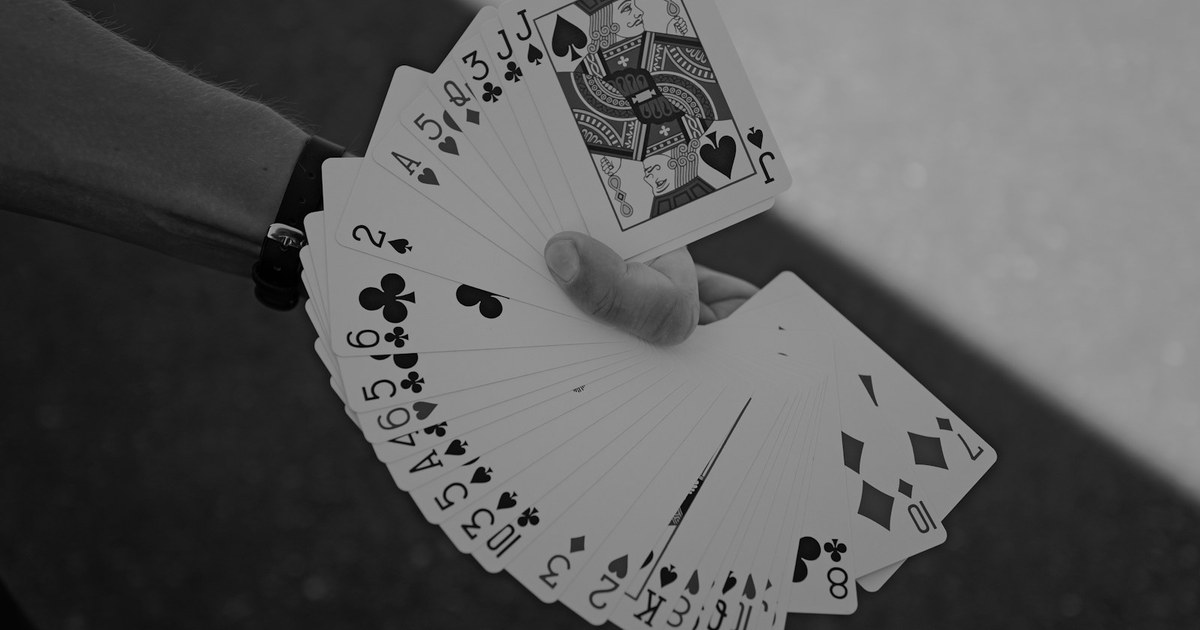
The three main variants of Indian Rummy are Points Rummy, Pool Rummy, and Deals Rummy, and they differ mainly in how a game concludes rather than how a hand is validated. In all three versions, the basic melding requirements remain the same. The defining distinction is structural: Points Rummy ends after a single hand, Pool Rummy ends through player elimination at a preset score ceiling, and Deals Rummy ends after a predetermined number of completed deals.
Because each variant settles differently, the choice matters for how long you commit and how much a single bad hand costs you. While traditional card players might be familiar with comparing hand strengths using standard poker hand rankings, Indian Rummy focuses purely on creating valid combinations before your opponents do.
| Feature | Points | Pool | Deals |
|---|---|---|---|
| Ends when | One hand is declared | One player remains | Fixed number of deals |
| Score carried across deals | No | Yes | Yes |
| Mid-game elimination | Not applicable | Yes | Usually none |
| Predictable length | High | Low | Moderate |
What stays the same across all three
Regardless of which format you sit down to play, the core table rules are the same. Every participant receives thirteen cards dealt from a standard setup using two card decks. The objective in every round is to arrange all thirteen cards into valid combinations according to standard indian rummy rules.
To declare a hand successfully, you must form at least two sequences. A sequence consists of three or more consecutive cards of the exact same suit. At least one of these combinations must be a pure sequence, meaning it contains no wildcards or printed jokers. The second required sequence can be impure, which means it may include a joker to substitute for a missing rank. Every remaining card in the hand must also fit into a valid sequence or a valid set. A set consists of three or four cards of identical rank across distinct suits.
Card values are the same in all three variants: unmatched numbered cards count as their face value, while tens, face cards and aces each carry ten points, and jokers carry zero. How much of the hand those values actually count against you depends on the sequence conditions, which is covered below.
How penalty scoring actually works
It is tempting to assume that a player simply counts every card that failed to fit a group, but Indian Rummy scoring is tied to whether the hand meets the required sequence conditions. A pure sequence and a second sequence matter not only for a valid declaration but also for working out which cards may be excluded from penalty calculation. Dropping, unsuccessful declarations, and any maximum penalty limit are set by the rules of the particular format, so a table that looks the same can settle different numbers. Confirm the settlement rules before you sit down rather than assuming one universal formula.
Points Rummy: one hand, then score
Points Rummy is the fastest and most direct format available. In this variant, the entire contest lasts for exactly a single deal. Every participant plays one hand, and the round finishes the moment a player makes a valid declaration.
Once the declaration occurs, each player works out the point value of their holding according to the settlement rules of that table. Because the action resolves in one deal, there is no accumulation of points across multiple rounds, and there is no fixed number of rounds scheduled.
This single-deal nature makes Points Rummy the shortest format. If you only have a few minutes, you can play one deal, settle the scores, and step away immediately without abandoning an ongoing contest.
Pool Rummy: eliminated at the limit
Pool Rummy introduces an elimination framework that spans multiple deals. Before the first card is dealt, players agree on a score ceiling. In the widely used Indian formats this ceiling is usually stated as a fixed number of points rather than as a multiple of any stake:
| Format | Elimination threshold |
|---|---|
| 101 Pool Rummy | A player is out on reaching 101 points |
| 201 Pool Rummy | A player is out on reaching 201 points |
In Pool Rummy, the number of deals is not fixed in advance. Instead, the game continues deal after deal until only one player survives. The round winner scores zero points, while every other player adds to their running total according to the settlement rules of the format. As players accumulate points over successive deals, they approach the ceiling.
Once a player reaches or exceeds that threshold, the player is eliminated from the table. Deals continue for the surviving participants until every competitor except one has been eliminated, and the last player remaining wins. Because elimination drives the format, Pool Rummy requires sustained patience and careful risk management across an unpredictable number of rounds.
Deals Rummy: a fixed number of hands
Deals Rummy offers a middle ground between the single-deal sprint of Points Rummy and the open-ended duration of Pool Rummy. In this variant, a fixed number of deals is determined before the contest begins. The number of deals, the scoring procedure and the final settlement depend on the selected game rules, so a two-deal, three-deal and six-deal table are all recognisable versions rather than one universal standard.
Every deal in this format is scored using the same calculation used in Points Rummy. However, unlike Pool Rummy, nobody is eliminated during play, regardless of how many points they lose in an individual hand. Every player stays seated and active for the entirety of the agreed deals.
After the final deal, the table sums the scores across all rounds. The player with the lowest accumulated score wins. This format rewards steady consistency, as a bad hand in the first deal can still be overcome by clean declarations in the remaining scheduled deals.
FAQ
Does hand validation change between Points, Pool, and Deals Rummy?
No. All three variants require thirteen cards, at least two sequences, at least one pure sequence, and every remaining card arranged into a valid group.
Can you get knocked out of a Deals Rummy game early?
No. Unlike Pool Rummy, nobody is eliminated during play in Deals Rummy. All players finish every scheduled deal.
How are face cards and aces scored when left unmatched?
Tens, jacks, queens, kings, and aces each add ten penalty points, numbered cards add their printed face value, and jokers count as zero. Whether a card can be excluded from that count depends on the sequence conditions described above.
Which variant finishes the fastest?
Points Rummy finishes the fastest because it concludes after a single deal, whereas Deals Rummy requires a set number of hands and Pool Rummy runs until only one player avoids elimination.
Sources
- Pagat Indian Rummy (Paplu): two decks of 52 plus printed jokers, thirteen cards each, at least two sequences with at least one pure, and the card values used above. This is a named traditional ruleset, so the sequence conditions and values apply to that version.
- Pagat Indian Rummy variations section: the short description of Points, Pool and Deals structures, and the observation that settlement details vary between versions.
- The 101 and 201 Pool Rummy thresholds: widely published Indian rummy platform rules. These are product rules on the platforms that offer them, not a claim that every Pool Rummy table uses one of these two numbers.
Where the article describes an ending condition or a threshold that is not part of the traditional ruleset above, it is identified as a format or product rule so the reader knows it may differ at another table.
This content is for educational and entertainment purposes only.