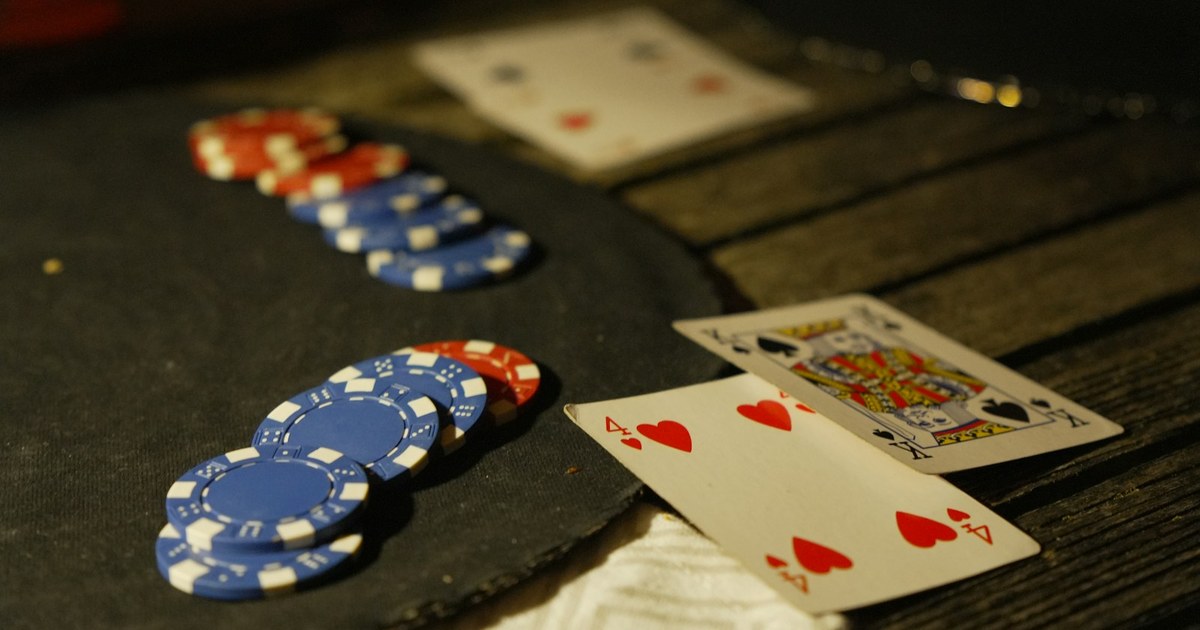
A draw is an unfinished poker hand that can still improve when another card comes. A player looks down at two hearts, the flop brings two more, and only one further heart would complete a flush. The hand is not finished yet, but a single card can transform it. Situations like this appear constantly at the table.
Learning how draws work is part of learning how to play Texas Hold’em.
What Is a Draw and What Are Outs?
A draw is an unfinished hand that can still improve into a stronger made hand. Most draws need one more card, although a backdoor draw needs two. A draw can also coexist with a made hand: a pair plus a flush draw still counts, because the flush part can improve the hand further. A made hand already has showdown value, such as a pair or a straight.
The specific unseen card you need to complete your hand is called an out. If you need a heart to complete a flush, every remaining heart in the deck is an out for you. Counting your outs allows you to evaluate whether staying in the hand is worth the cost.
Consulting the standard poker hand rankings will remind you that high-ranking hands like flushes and straights beat basic pairs. However, a made hand beats a draw at showdown unless the draw actually gets there. Never count a draw as a made hand before the last card lands.
Flush Draws, Open-Ended Straight Draws, and Gutshots
Draws come in different shapes, and some give you many more chances to improve than others.
A flush draw happens when you hold four cards of the same suit and wait for a fifth. A standard deck contains 13 cards of each suit. Since you can see four cards of that suit (between your hole cards and the community cards), exactly 9 outs remain in the deck.
An open-ended straight draw (often abbreviated as OESD) consists of four sequential cards that can be completed at both ends. For example, if you hold 6-7-8-9, either a 5 at the bottom or a 10 at the top gives you a five-card straight. Because there are four 5s and four 10s left in the deck, you have exactly 8 outs.
A gutshot, also called an inside straight draw, occurs when you need a single rank in the middle to complete the sequence. For example, holding 6-7-9-10 leaves a hole in the center. Only an 8 completes the straight. Because only four 8s exist in the deck, a gutshot offers exactly 4 outs.
Estimating Your Chances: The Rule of 4 and 2
You do not need complicated math at the table. Players use a shortcut called the rule of 4 and 2 to calculate rough hitting chances. These are estimates, not guarantees.
When you are on the flop with two cards to come (the turn and the river), multiply your outs by 4:
- An open-ended straight draw with 8 outs completes about 32 percent of the time.
- A flush draw with 9 outs completes about 36 percent of the time.
When you are on the turn with only one card left to come (the river), multiply your outs by 2:
- An open-ended straight draw with 8 outs completes about 16 percent of the time.
- A flush draw with 9 outs completes about 18 percent of the time.
A Complete Example Hand
To see a draw in action, let us walk through a full hand that starts with the Small Blind and the Big Blind posting their forced bets.
Player 1 holds 9h8h. Player 2 holds KdQd.
The flop arrives: 7c6d2s.
Player 1 does not have a pair, but holds an open-ended straight draw with 6-7-8-9. Any 5 or any 10 completes a straight, giving Player 1 exactly 8 outs. Player 2 holds king-high with KdQd.
The turn brings the Th. Player 1 hits the draw and completes a ten-high straight: Th9h8h7c6d.
The river brings the 4c, which changes nothing. The final five-card board reads 7c6d2sTh4c.
At showdown, both players construct their best five-card combination:
- Player 1 shows Th9h8h7c6d, which is a ten-high straight.
- Player 2 shows KdQdTh7c6d, which is king-high with a queen kicker.
Comparing hand ranks, a straight beats king-high. Player 1 wins the entire pot with the straight completed by the draw.
The Costly Mistake of Chasing
The most common trap for beginners is chasing every draw regardless of the price. If your draw misses on the river, it remains an unfinished hand, usually just high card.
Calling large bets with a weak gutshot is an easy way to lose chips. With 4 clean outs and only the river to come, the Rule of 2 gives a rough estimate of about 8%; from the flop, with both turn and river still to come, the chance is higher. Paying a heavy price for an 8 percent outcome will quickly drain your stack. The weaker the draw, the cheaper the price you need to justify staying in the hand.
Frequently Asked Questions
What happens if my draw misses on the river?
If your draw does not complete by the river, you simply hold whatever made hand you currently have, which is often just high card. High card rarely wins against an opponent who calls at showdown.
Is an open-ended straight draw better than a gutshot?
Yes. An open-ended straight draw has 8 outs because two different ranks can complete it. A gutshot has only 4 outs because you need one specific rank.
Can a draw beat a pair before the river?
No. At any given moment, a made hand leads. A pair beats an incomplete draw until the draw actually catches its card on the board.
How many outs does a flush draw have on the flop?
A flush draw always has exactly 9 outs on the flop, assuming no other cards of that suit are known to you.
Before calling with a draw, count your outs, check which street you are on, and compare the price of the call with your rough chance of completing the hand.
This content is for educational and entertainment purposes only.